Introduction
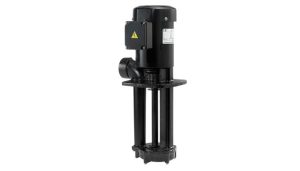
Water supply and pressure‑boosting systems are increasingly subject to demanding requirements: constant, stable pressure, efficient energy use, quiet operation, corrosion resistance, compact design, and reliability. The BM hp series of pumps reflects this shift. In particular, the BM hp 125 stands out as a high‑performance “encapsulated pump” model geared for heavy‑duty applications.
As supplied by Mohamed Harb Co., the BM hp 125 is positioned to serve commercial buildings, industrial filtration, irrigation systems and more — combining robust construction with modern control features.
In this article, we will go through:
-
The product overview & positioning of the BM hp 125
-
Technical specifications & design features
-
Core advantages and benefits for end‑users
-
Key application areas
-
Installation, operation & maintenance considerations
-
How to choose this pump vs alternatives
-
Summary & take‑away recommendations
Product Overview & Positioning
The BM hp 125 belongs to the BM hp series of encapsulated pumps offered by Mohamed Harb Co. (via Grundfos technology). According to the distributor’s information, the BM hp series are “High‑performance models designed for heavy‑duty filtration and water supply applications”.
Key positioning points:
-
Encapsulated motor design: The “encapsulated pump” concept implies that the motor is hermetically sealed, typically in a stainless steel housing, for longer life, minimal contamination and higher reliability.
-
Focus on higher flows / heads: The BM hp 125 is noted for flow capacity up to ~165 m³/h (depending on duty) and head up to ~79m/88m in the BM hp range.
-
Distributor support: Mohamed Harb Co. emphasises not only the equipment but also support – installations, after‑sales service, integration.
-
Versatility: The series is marketed for domestic water supply in large buildings, industrial filtration, commercial buildings, irrigation systems, etc.
Thus, if you’re specifying a pump solution for a large building, industrial plant, or high‑flow filtration/pressure boosting scenario, the BM hp 125 is a solution worth evaluation.
Technical Specifications & Design Features
While full datasheets should be obtained from Mohamed Harb Co. or Grundfos, the following summarises available spec and design details for the BM hp 125 from the distributor’s published info:
Key Specifications
-
Maximum flow: ~165 m³/h for BM hp 125 specifically (as part of the BM hp series).
-
Head (maximum): ~79 m (for BM hp 125) within the BM hp listing.
-
Liquid temperature range: 0 °C to 45 °C (for encapsulated pumps in the series).
-
Maximum operating pressure: up to ~83 bar for the series.
-
Motor type: Asynchronous motor, sealed, in stainless‑steel housing (for the encapsulated design).
-
Construction: Stainless steel, corrosion resistant, designed for durability.
Design Features
Encapsulated Motor: The motor is hermetically sealed in a stainless steel housing. This means less risk of contamination, no ventilation openings, better suitability for demanding environments (dew, humidity, contamination).
Compact Footprint: The pump is designed to install in tighter spaces – which is beneficial in modern buildings where space is premium.
Low Noise Operation: The sealed motor design and high quality mechanical construction mean lower vibration and sound levels — advantageous in e.g., hospitals, hotels, commercial buildings.
High Efficiency: The pump uses advanced design to achieve higher efficiency, reducing energy consumption.
Advanced Control / Options: According to the distributor, the BM hp 125 features or supports advanced controls – e.g., frequency converter, intelligent monitoring, remote control interface, etc.
Durability / Materials: Made from high‑quality stainless steel, resistant to corrosion and designed for long lifespan even in challenging conditions.
Components Breakdown
-
Pump stage: Centrifugal impeller(s) designed for required head/flow.
-
Motor: Sealed asynchronous motor, likely IE efficiency class, integrated with pump housing or coupled.
-
Sensors / Controls: Pressure and/or flow sensors monitoring operation, enabling variable speed control if used.
-
Panel / Frequency converter: For models with variable speed, the converter enables precise pressure/flow control, energy savings.
-
Housing / Materials: Stainless steel casing, shafts, seals designed for corrosion resistance, minimal leakage risk.
Core Advantages & Benefits
When evaluating the BM hp 125, here are the key benefits you can expect, and why they matter.
1. Stability of Pressure & Flow
In building services (e.g., high‑rise apartments, hotels, hospitals) or industrial / filtration systems, one of the major challenges is maintaining constant pressure regardless of varying demand. The BM hp 125’s design with advanced controls, sealed motor, and appropriate hydraulics helps deliver consistent output even under changing load conditions.
This results in better user experience (no pressure soak when multiple taps run), fewer complaints, and less need for downstream regulation.
2. Energy Efficiency
Energy cost is a major component of lifecycle cost of pumps. The BM hp 125 emphasises high efficiency in its design, and when combined with variable speed drive (VSD) or frequency converter, the energy savings can be significant. Less wasted power means lower operating costs, better ROI.
Also, the sealed motor and premium materials reduce losses due to leakage, corrosion or inefficient running ‑ which further improves lifetime efficiency.
3. Reliability & Low Maintenance
The sealed motor housing and stainless steel construction reduce exposure to environment, dust, moisture, contamination—which are common causes of failure in pumps. Less maintenance means fewer service calls, less downtime, lower life‑cycle cost.
Mohamed Harb Co. emphasises this reliability and long‑term support.
4. Compactness & Quiet Operation
In many building applications space is limited and noise is a concern (e.g., residential blocks, hospitals). The compact design of BM hp 125 makes installation easier even in machine rooms/plant rooms with limited space. The quiet motor and hydraulics reduce noise transmission to occupants, which is a big plus for comfort and building standards.
5. Corrosion Resistance & Longevity
Stainless steel construction and encapsulated design mean the pump can withstand harsh conditions—variation in water quality, humidity, temperature shifts. This means longer lifespan and fewer replacements, better total cost of ownership.
6. Application Versatility
Because the pump handles decent flow and head and is designed for demanding duty, it can be used in multiple application domains: from commercial/residential building pressure boosting to water treatment/filtration, reverse osmosis systems, irrigation networks, industrial supply. This flexibility means it can be a “one‑stop” choice for many projects.
Key Application Areas
Here are some of the main application domains where the BM hp 125 makes strong sense, and why.
Commercial & Residential Building Pressure Boosting
For high‑rise residential towers, hotels, hospital buildings, office complexes etc., the BM hp 125 provides an ideal solution for boosting and maintaining water pressure. The combination of compactness, quiet operation, reliability, and efficient control makes it well suited.
Typical scenario: A building with many floors, multiple draw‑offs; varying demand over day/night; need for steady pressure for showers, taps, fire‑fighting systems. Using BM hp 125 in a booster set (with tanks, controls) can handle this smoothly.
Industrial Water Supply & Filtration
In industrial plants, water supply for cooling systems, cleaning, process feed, filtration (RO) demands pumps that can deliver stable flow/head, minimal downtime, corrosion/contamination resistance. The BM hp 125 fits here with its high construction quality and motor protection.
Also in filtration systems (reverse osmosis, UF, etc), stable pressure is critical — this pump supports that.
Irrigation & Agricultural Use
Irrigation networks, greenhouses, agricultural water supply can impose range of demands: variation in flow, outdoor exposure, corrosion risk, long run times. With its robust build, the BM hp 125 works well in such contexts where reliability over time is vital.
Commercial‑Water Systems & Utility Supply
For utilities supplying water to neighborhoods, mid‑sized plants, booster stations, the BM hp 125 offers a dependable, efficient option. In such applications, minimal downtime and efficient continuous operation are major factors.
Retrofit/Machine Room Upgrades
In older buildings or plants replacing outdated pump systems, the BM hp 125 serves as a modern replacement: compact footprint, better efficiency, easier control integration — making it feasible to upgrade existing installations without major rearrangement.
Installation, Operation & Maintenance Considerations
To get the best out of the BM hp 125, and to ensure longevity and proper performance, certain best practices apply.
Pre‑Installation Planning
-
Site conditions: Verify ambient temperature (0 °C to 45 °C specification), ensure adequate ventilation, accessibility for servicing, sufficient space for maintenance.
-
Foundation & Mounting: The pump should be mounted on a solid, level foundation or baseplate, with anti‑vibration pads if required (especially in quiet environments).
-
Piping design: Ensure suction piping is short, straight where possible, with minimal elbows and correct sizing to avoid cavitation or suction drop. The discharge piping must match design flows and head.
-
Electrical supply: Ensure correct supply voltage/frequency, proper motor protection (over‑temperature, over‑current, under‑voltage). If the pump uses a variable frequency drive (VFD), ensure proper wiring, grounding, and control integration.
-
Control panel/integration: If used in a booster set or integrated into building management system (BMS), make sure sensors (pressure, flow) are wired correctly, automation sequences defined (start/stop, alarms, setpoint control).
-
Priming & commissioning: For a centrifugal pump, ensure the pump is primed (filled with liquid) if required; check that the motor rotation is correct; check for leaks; gradually ramp the pump to full speed; monitor pressure, flow, motor current.
Start‑up & Operation
-
Monitor the pump during initial run: check vibration, noise levels, motor current, pressure stability, pump temperature.
-
Make sure the system is operating within the duty point (flow/head) as per design. Operating far off the duty point can reduce efficiency and cause wear.
-
Use proper control logic: in variable demand situations, VFD or staging controls help to maintain efficiency rather than running at full speed continuously.
Maintenance Best Practices
-
Routine inspection: Periodically check for leaks, unusual noise/vibration, motor heating.
-
Motor & seal checks: Although the motor is sealed, ensure that the surrounding environment is clean, dry, and no ingress of dust or moisture. Seals should be inspected during major service intervals.
-
Impeller/hydraulics check: Over time, impeller wear or erosion can reduce performance. Monitor flow/pressure: if a gradual drop appears, it might be due to wear or fouling.
-
Electrical checks: Monitor motor current, insulation resistance, connector condition. If using a VFD, monitor for harmonics, heat, and ensure the drive is within safe operational conditions.
-
Winterisation / shut‑down: If the system may be shut down for long periods (e.g., seasonal irrigation), ensure the pump is drained, cleaned and protected from frost and algae.
-
Spare parts & service: Use genuine parts (impellers, bearings, seals) recommended by the manufacturer/distributor. Having a service contract with Mohamed Harb Co. or a qualified technician may minimise downtime.
Troubleshooting Common Issues
-
Drop in pressure or flow: Could be due to impeller wear, suction blockage, air entrainment, pump running too far off duty.
-
Motor overheating: Check for voltage issues, blocked ventilation, over‑current or mechanical binding.
-
Unusual vibration / noise: Might indicate bearing wear, misalignment, cavitation from suction issues, or foreign debris.
-
Leakage: Inspect seals, connections, pump casing. Although the motor is sealed, external piping connections must be checked.
How to Choose the BM hp 125 – What to Evaluate
When deciding whether the BM hp 125 is the right pump for your project (versus another pump or manufacturer), here are key evaluation factors:
1. Duty Point Matching (Flow & Head)
Ensure that your system’s required flow (m³/h) and head (m) align with the pump’s curve. For BM hp 125, typical flow ~165 m³/h and head ~79m in the series. If your system demands significantly higher or lower, another model (or series) might be more efficient. The BM hp series lists many models to cover different flows/heads.
2. Efficiency & Energy Cost
Check the pump’s efficiency for your actual duty point (not just the best point). Consider whether a VFD will be used to adapt to variable demand. Calculate lifecycle energy costs — sometimes a higher upfront cost pump can yield savings long‑term.
3. Materials & Environment
If the pumped liquid is aggressive, or the environment is harsh (humid, dusty, corrosive), then stainless construction and a sealed motor (as in BM hp 125) become more important. For milder conditions, a more standard pump might suffice.
4. Installation Constraints
-
Space constraints: Does your plant room allow a compact pump?
-
Noise sensitivity: If in a hospital or residential building, quiet operation is key.
-
Maintenance access: Ensure you can access the pump, inspect, service.
-
Integration with control/automation: If you need remote monitoring or BMS integration, ensure the pump and controls meet your standards.
5. Total Cost of Ownership (TCO)
Consider not just purchase price, but: installation cost, energy cost, maintenance cost, downtime risk, life expectancy. The reliability and durability of BM hp 125 (as claimed) help reduce maintenance/downtime costs.
6. Distributor/Support
Mohamed Harb Co. is positioned as a distributor with good support – installation, after‑sales, service network. A robust support framework can reduce risk
Check warranty, spare‑parts availability, local technical competence.
7. Future Growth / Flexibility
If your system may expand in future (higher demand, additional buildings, etc), check whether the selected pump has capacity margin or whether the series offers up‑scaling models (BM hp 160, BM hp 215, etc) that you could migrate to.
Case Study (Hypothetical)
Let’s run a hypothetical scenario to illustrate how one might select, install and benefit from a BM hp 125.
Scenario
A 20‑storey residential tower (approx. 100 units) in a Middle East city. The building demands a booster system to maintain ~5 bar pressure at the highest floors during peak demand (morning showers) and also feed fire‑fighting system with certain pressure. The pump room is compact, near ground floor; noise must be minimal as adjacent to lobby and offices. Also, energy cost is significant over 20 years lifecycle.
Selection
-
Estimated peak flow demand: ~120 m³/h to meet simultaneous usage & fire system.
-
Head requirement: Sum of static head + losses ~60m.
-
Checking BM hp 125: flow capacity ~165 m³/h, head ~79m – fits with margin.
-
Choose BM hp 125 with VFD to handle variable demand (morning peak vs midday lull).
-
Material: stainless steel, sealed motor suits quiet/lobby‑adjacent environment.
-
Provide pump + pressure sensor + control panel tying into building BMS (for remote monitoring).
Installation Highlights
-
Mount on concrete base, anti‑vibration pads.
-
Suction piping sized to avoid cavitation (short run, minimal elbows).
-
Discharge piping sized for flow, check valves, pressure sensor.
-
Commissioning: gradually bring up to full speed, monitor motor current, vibration, ensure stable pressure control.
-
Integration: configure BMS alarms (pressure drop, pump trip, motor overload).
Operational Benefits
-
During peak morning hour, the pump ramps up via VFD, delivering required flow/pressure.
-
During low demand hours, speed reduces, thereby saving energy.
-
Low noise and vibration mean no disturbance to lobby or occupants.
-
Durability of pump ensures minimal maintenance visits; parts and service via Mohamed Harb Co. reduce downtime.
-
Over 20 years, energy savings + less downtime yield lower TCO.
Summary & Take‑Away Recommendations
The BM hp 125 encapsulated pump offered by Mohamed Harb Co. presents a robust, high‑performance solution for demanding water supply, pressure boosting and industrial water systems. Its key strengths are: sealed motor design, stainless steel construction, compact/quiet operation, high efficiency, and flexible control options.
When you’re evaluating a pump for a large building, industrial plant, or irrigation/filtration system, here are my recommendations:
-
Match duty point carefully: Confirm your required flow/head and verify that the BM hp 125 meets with comfortable margin.
-
Plan for variable demand: Use VFDs and controls to optimise energy use; the BM hp 125 supports this mode.
-
Consider installation context: Space, noise, environment — the sealed stainless design helps.
-
Think TCO, not just upfront cost: Reliability, maintenance, energy all matter.
-
Ensure good support & service: Working with a strong distributor like Mohamed Harb Co. adds value.
-
Future‑proof: If expansion likely, consider sizing or series variants accordingly.
In conclusion: If your project demands a pump that will perform reliably over years with minimum fuss, that integrates into modern control systems, and can cope with demanding water supply conditions — the BM hp 125 is a very worthy candidate.
I’d recommend contacting Mohamed Harb Co. directly for detailed data sheets, pricing, local service arrangements, and project‑specific guidance.