Introduction
What Is a Diaphragm Dosing Pump — The Basic Principles
Why Diaphragm Dosing Pumps Are Preferred
Typical Applications
The “Digital” Edge — What Digital Diaphragm Dosing Pumps Bring
The Role of a Specialized Supplier
Potential Challenges & Considerations
Where Digital Diaphragm Dosing Pumps Add Value
Why “Digital + Contractor” Is Often Better Than “Standard + Standalone”
Key Specifications
Potential Value for Clients
Example Use Cases
Recommendations
Conclusion
Introduction
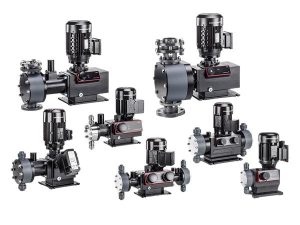
In many industrial, commercial, and municipal processes — from water treatment to chemical dosing to food & beverage production — precise, reliable, and safe pumping of liquids (often chemicals) is critical. One of the most widely used technologies for such tasks is the diaphragm dosing pump: a pump that uses a flexible diaphragm and a controlled reciprocating mechanism to deliver accurate, metered flow of fluid. Dosing Pump Shop B.V.+2wrsdosing.com+2
When such pumps are offered by a reputable supplier / contractor — for instance, Mohammed Harb Company — users benefit not only from the pump hardware itself but also from expertise in installation, integration, maintenance, and support. In this article, we explore the technology, design, benefits, uses, and best‑practice guidance for digital diaphragm dosing pumps such as might be provided by Mohammed Harb.
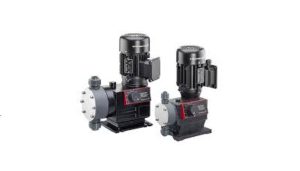
What Is a Diaphragm Dosing Pump — The Basic Principles
Pump Design & Operating Principle
-
A diaphragm dosing pump belongs to the family of positive displacement pumps, where a fixed volume of fluid is displaced per stroke, ensuring consistent metering. ter-en.com+2Dosing Pump Shop B.V.+2
-
The central element is a flexible diaphragm. As the diaphragm moves (expands and contracts), it changes the volume of the pumping chamber: when volume increases, fluid is drawn in (suction stroke); when volume decreases, fluid is pushed out (discharge stroke). Fluid-o-Tech+2Romegamart+2
-
The suction and discharge sides are equipped with non-return (check) valves to control direction and prevent backflow. ter-en.com+1
-
Depending on the design, diaphragm actuation can be achieved in several ways — from electromagnetically driven solenoids to motor-driven or cam/gear-driven mechanisms. ter-en.com+2electronicdosingsystems.co.uk+2
-
For “digital” or electronically controlled diaphragm dosing pumps, the stroke length, frequency, and even control logic (e.g. via external controllers or PLCs) can be adjusted to achieve precise and repeatable dosing. electronicdosingsystems.co.uk+2en.ekinendustriyel.com+2
Thus, a diaphragm dosing pump ensures that each cycle dispenses a precise, predetermined volume — a critical requirement for applications where dosing accuracy matters (chemicals, water treatment, pharmaceuticals, etc.).
Why Diaphragm Dosing Pumps Are Preferred — Key Advantages
Diaphragm dosing pumps offer multiple advantages compared to simpler or more conventional pumps (e.g. centrifugal, peristaltic). Some of the most important:
-
Leak‑free operation / chemical isolation: Because the diaphragm separates the fluid from moving mechanical parts, there is no need for mechanical shaft seals; this eliminates a common source of leaks — which is especially important when pumping corrosive, toxic, or hazardous chemicals. ter-en.com+2Coyon AquaTech Limited+2
-
Chemical compatibility & resistance: The wetted parts (diaphragm, valves, pump head) can be made of chemically resistant materials (e.g. PTFE, PVDF, corrosion‑resistant plastics) allowing safe handling of aggressive chemicals (acids, alkalis, solvents) or corrosive media. en.ekinendustriyel.com+2ALMAWATECH+2
-
Self‑priming and dry‑run tolerance: Many diaphragm pumps can self‑prime (i.e. draw fluid even from below pump level) and can tolerate dry-running (running without fluid) for short periods without damage — beneficial in processes with intermittent supply or variable fluid levels. wrsdosing.com+2Dosing Pump Shop B.V.+2
-
Precise, stable dosing & flow control: Because the pump dispenses fixed volume per stroke, and stroke/frequency can be adjusted, these pumps achieve high dosing accuracy — often critical in chemical dosing, water treatment, or industrial processes. SPS Pumps+2Romegamart+2
-
Wide range of fluids & solids-handling: Diaphragm pumps can handle a variety of fluids — from low-viscosity water/chemicals to viscous solutions or even slurries — and some designs manage suspended solids without clogging. wrsdosing.com+2qeehuapump.com+2
-
Compact, flexible installation: Many models are compact, modular, and can be mounted in different orientations (vertical/horizontal), making them suitable for retrofits, confined spaces, or integration into larger systems. en.ekinendustriyel.com+2Fluid-o-Tech+2
-
Low maintenance and operational reliability: With fewer moving parts, no mechanical seals, and materials resistant to corrosion and wear, diaphragm dosing pumps tend to require less maintenance and withstand harsh environments. Coyon AquaTech Limited+2Dosing Pump Shop B.V.+2
Because of these advantages, diaphragm dosing pumps are a standard choice for critical applications across industries. qeehuapump.com+2SPS Pumps+2
Typical Applications — Where Diaphragm Dosing Pumps Shine
Due to their precision, chemical resistance, and reliability, diaphragm dosing pumps are used widely in many fields. Key application areas:
-
Water & wastewater treatment: For injecting chemicals such as chlorine, acids, alkalis, coagulants, pH adjusters — ensuring correct dosage and preventing overdosing or underdosing. Romegamart+2emaad.co+2
-
Chemical industry & processing: Handling corrosive or hazardous chemicals, chemical injection, dosing solvents, acids, or reagents; safe, sealed operation is critical. qeehuapump.com+2Fluid-o-Tech+2
-
Pharmaceutical, food & beverage: Dosing additives, preservatives, cleaning agents; maintaining hygiene and avoiding contamination thanks to leak‑free, sealed design. SPS Pumps+1
-
Industrial processes & manufacturing: Metering of lubricants, coatings, adhesives, solvents, resins, slurries — especially where fluid properties vary or aggressive chemicals are used. ScienceDirect+2tapflo.com+2
-
Boiler water treatment, cooling towers, utility systems: Precise dosing of anti-scaling agents, corrosion inhibitors, acid/alkali neutralization in closed-loop systems. emaad.co+2ALMAWATECH+2
-
Environmental applications: Wastewater treatment, sludge processing, chemical injection in treatment plants, industrial effluent neutralization. qeehuapump.com+2SPS Pumps+2
Because of this versatility, diaphragm dosing pumps — especially digitally controlled modern ones — are often the “workhorse” in chemical metering and fluid management systems across industries.
The “Digital” Edge — What Digital Diaphragm Dosing Pumps Bring
While the basic diaphragm dosing pump offers many benefits, modern “digital” versions raise the bar further by integrating electronic controls, automation, and enhanced precision. Here’s what “digital diaphragm dosing pumps” typically add:
-
Electronic control of stroke and frequency: Rather than fixed mechanical stroke, digital pumps can vary stroke length and the rate of strokes — enabling dynamic adjustment of flow rates according to process demands. en.ekinendustriyel.com+1
-
Automation & integration with control systems / PLCs: Pumps can integrate with control panels or industrial automation systems, enabling feedback-based dosing (e.g. respond to sensor inputs like pH, flow, concentration), remote control, and real-time adjustment. en.ekinendustriyel.com+2emaad.co+2
-
Higher dosing accuracy and repeatability: With precise electronic actuation and control, dosing accuracy can reach tight tolerances — crucial in sensitive chemical, pharmaceutical, or water-treatment applications. SPS Pumps+2lgpumpworld.com+2
-
Improved safety and reduced human error: Automation reduces manual handling of chemicals, reduces risk of overdosing or underdosing, and ensures consistent operation — which is especially important for hazardous or toxic chemicals. emaad.co+2Coyon AquaTech Limited+2
-
Efficient operation & energy saving: Modern digital pumps often use efficient motor or electromagnetic drives; some may only consume significant power during actuation (pulse-based), which can reduce overall energy consumption. en.ekinendustriyel.com+1
Thus, digital diaphragm dosing pumps combine the robust mechanical advantages of diaphragm technology with modern electronic control and precision — an ideal match for modern industrial and environmental needs.
The Role of a Specialized Supplier / Contractor — Why Mohammed Harb Company Matters
Purchasing and installing diaphragm dosing pumps is not just about buying hardware. The support, expertise, and integrity of the supplier or contractor can make a major difference. Here’s why working with a specialized company — e.g. Mohammed Harb Company — may be a good decision:
-
Technical selection and sizing
-
Different applications require different flow rates, pressures, chemical compatibilities, materials. A professional supplier can assess the medium (chemical type, viscosity, temperature), required flow, pressure, and dosing pattern — then recommend the right pump model.
-
They can also advise on necessary materials (e.g. PTFE, PVDF, chemical‑resistant plastics) to ensure long-term stability and chemical compatibility.
-
-
Proper installation and integration
-
Digital diaphragm dosing pumps often need correct piping, valves (check valves, foot valves), mounting orientation, control wiring, possibly integration with sensors or control systems. A specialized contractor ensures proper installation to avoid leaks, cavitation, or performance issues.
-
They can also handle commissioning: verifying stroke settings, stroke frequency, compatibility with existing systems (tanks, chemical feed lines, mixing systems, water supply, etc.).
-
-
Maintenance & after‑sales support
-
Pumps handling chemicals often require periodic inspection: diaphragm condition, valves, wear parts, chemical corrosion, leaks. A responsible supplier provides maintenance plans, spare parts, and technical support — critical for reliability and safety.
-
In case of chemical dosing systems, safety and environmental compliance are important; a professional contractor helps ensure leak-free operation and safe handling protocols.
-
-
Customization and system design
-
Depending on the use case (water treatment plant, industrial process, chemical injection system), a specialized company can provide a tailored dosing system: pump + control panel + sensors + safety features + integration with existing infrastructure.
-
This not only ensures optimal performance, but also reduces risk (overdosing, spills, inconsistent dosing) and provides scalability for future upgrades.
-
-
Regulatory compliance and quality assurance
-
In sectors like water treatment, chemical processing, or pharmaceuticals, there may be regulations for chemical handling, dosing accuracy, leak prevention, environmental safety. A reputable supplier knows these standards and ensures the system meets them.
-
Therefore, working with a company like Mohammed Harb — especially for “digital diaphragm dosing pumps” — shifts your setup from mere hardware purchase to a professionally engineered and supported solution.
Potential Challenges & Considerations — What to Watch Out For
As powerful and versatile as digital diaphragm dosing pumps are, there are still important considerations and possible limitations when selecting and using them:
-
Compatibility of pumped fluid: Not all diaphragms and pump head materials are suitable for every chemical. Aggressive chemicals may require high‑grade PTFE or special valve materials. It’s critical to ensure material compatibility — something a good supplier should verify.
-
Appropriate flow/pressure selection: Over‑ or under-sized pumps can lead to inefficiency, excessive wear, or failure to maintain dosing accuracy. Detailed sizing based on actual process parameters is essential.
-
Maintenance and wear of wetted parts: Diaphragm, valves, seals — though designed for durability — will wear over time, especially with corrosive fluids. Regular inspection and replacement are needed to prevent leaks or performance degradation.
-
Proper installation and calibration: Poor installation (e.g. incorrect mounting, faulty valves, improper priming) or miscalibration (stroke/flow settings) can compromise performance, cause pulsation, or reduce dosing accuracy.
-
Cost vs benefit analysis: High-precision, digital dosing pumps with chemical-resistant materials entail higher upfront cost. It’s important to weigh this against long-term benefits: chemical savings, increased safety, reduced manual labor, lower maintenance.
-
Need for safety protocols: When dosing hazardous or toxic chemicals, safe handling, leak prevention, containment, and compliance with environmental/safety regulations are mandatory.
But with proper planning, installation, and maintenance, these challenges can be managed — especially when working with an experienced supplier.
Use Cases — Where Digital Diaphragm Dosing Pumps Add Value (Real-world Scenarios)
Here are some scenarios where investing in digital diaphragm dosing pumps (via a trusted contractor) can significantly improve efficiency, safety, and reliability:
1. Municipal or Industrial Water Treatment Plant
In water treatment — whether municipal water supply, wastewater treatment, or industrial water processing — chemical dosing (e.g. chlorine, flocculants, pH adjusters, anti-scalants) must be accurate and consistent. A digital diaphragm dosing pump can:
-
deliver precise, repeatable chemical doses,
-
automatically adjust dosing based on sensor feedback (e.g. pH, flow),
-
minimize chemical waste and overdosing,
-
ensure sealed, leak-free operation even with corrosive chemicals,
-
operate 24/7 with minimal maintenance.
2. Chemical Processing & Industrial Plants
For plants handling aggressive chemicals, solvents, or corrosive media — where leak prevention and chemical compatibility are critical — digital diaphragm dosing pumps provide safe transfer and dosing with controlled flow. They also reduce human exposure and risk.
3. Boiler Water Treatment / Cooling Towers / Closed Systems
In systems requiring periodic or continuous chemical injection (anti-scale agents, corrosion inhibitors, pH balancers), a dosing pump ensures stable chemical delivery, improves system longevity, and reduces maintenance of downstream equipment.
4. Food, Beverage & Pharmaceutical Facilities
When precise addition of chemicals, additives, preservatives, or cleaning agents is required — and contamination or leaks must be avoided — diaphragm dosing pumps (with appropriate sanitary materials) ensure hygienic, accurate, and safe operation.
5. Research, Laboratory & Small‑Scale Dosing Applications
For labs, pilot plants, or small industrial setups needing accurate low-volume dosing — digital diaphragm dosing pumps offer fine control, repeatability, and flexibility with compact footprint.
Why “Digital + Contractor” Is Often Better Than “Standard + Standalone”
You might ask: why not just buy a standard diaphragm dosing pump and install it yourself? While that may be feasible for simple setups, combining a digital pump with a professional contractor/supplier (e.g. Mohammed Harb) often offers superior benefits:
-
System-level design & integration: Digital pumps require correct mounting, valve configuration, control wiring, possibly sensors/automation. A contractor ensures the entire system (pumps, pipes, valves, control) is correctly integrated.
-
Reliability and sustainability: Contractors typically provide warranties, maintenance services, spare parts — which prolong system life and reduce downtime.
-
Compliance and safety assurance: Handling chemicals requires adherence to safety and environmental regulations; professionals help ensure compliance and safe operation.
-
Customized solutions & scalability: Contractors can tailor the dosing solution to your application (flow, pressure, chemical type, frequency), and plan for future expansion or modification.
-
Reduced risk: Mistakes in chemical dosing systems (wrong materials, poor installation, leaks) can be costly or dangerous. Professional handling reduces that risk significantly.
Hence, for industrial, municipal, or critical applications — digital diaphragm dosing pumps supplied & installed by a competent company represent a more robust and future‑proof solution than a “DIY + generic pump” approach.
Key Specifications & What to Check When Selecting a Diaphragm Dosing Pump
When evaluating a diaphragm dosing pump (digital or otherwise), ensure you check the following key specifications and parameters — ideally with assistance from a knowledgeable supplier:
-
Flow rate range (e.g. from small flow — 0.1 L/h — to higher flows, depending on need) SPS Pumps+2Dosing Pump Shop B.V.+2
-
Maximum discharge pressure (head) — standard models may go up to ~20 bar, but high-pressure variants exist for more demanding applications. SPS Pumps+2tapflo.com+2
-
Chemical compatibility — materials for wetted parts (diaphragm, valves, body) must match the chemical’s aggressiveness, viscosity, temperature, and solids content.
-
Drive mechanism & control — whether the pump is electromagnetic/solenoid, motor-driven, or cam/gear-driven; whether stroke/frequency is adjustable or digitally controlled; whether integration with automation systems (PLC, sensors) is needed. ter-en.com+2en.ekinendustriyel.com+2
-
Sealing and leak-prevention design — diaphragm + sealed pump head + high-quality check valves are essential for chemical safety and environmental compliance. Fluid-o-Tech+2qeehuapump.com+2
-
Maintenance accessibility and spare parts availability — easy replacement of diaphragm, valves; availability of spare parts; ease of servicing; minimal downtime.
-
Footprint and installation flexibility — compact size, mounting options (vertical/horizontal), ease of connection to existing piping/chemical supply tanks. en.ekinendustriyel.com+2Castle Pumps+2
-
Automation & control features (if digital) — ability to adjust dosage based on process conditions, remote control, compatibility with sensors or control systems.
When such specs are carefully matched with application requirements, a diaphragm dosing pump becomes a precise, efficient, and reliable component of the process.
Why “Digital Diaphragm Dosing Pumps from Mohammed Harb Company” — Potential Value for Clients
Assuming that Mohammed Harb Company supplies and supports digital diaphragm dosing pumps, choosing them can bring substantial value for clients — especially for demanding or professional applications. Here’s a summary of that value proposition:
-
Expert selection and specification: Helping clients choose pumps that match chemical type, flow & pressure requirements, and environmental conditions.
-
Professional installation & commissioning: Ensuring correct pump installation, correct piping, valves, controls, and safe commissioning of system.
-
Integrated solutions: Not just a pump — but entire dosing systems: pump + control panel / automation + sensors + safety/containment provisions + maintenance plan.
-
After-sales support and maintenance services: Spares, periodic maintenance, inspection, servicing — increasing reliability and lifetime.
-
Compliance with safety and environmental standards: Particularly important for chemical dosing, wastewater treatment, or hazardous fluids.
-
Scalability and flexibility: Ability to upgrade, expand, or reconfigure dosing systems as processes evolve or requirements change.
This overall approach turns a simple pump into a robust, long-term solution — especially for industrial clients, water/wastewater treatment plants, chemical processors, and similar facilities.
Example Use Cases (Hypothetical) — How Clients Might Use Such Pumps
To illustrate how digital diaphragm dosing pumps from a company like Mohammed Harb can be used in practice, here are some hypothetical but realistic examples:
-
Municipal water treatment plant: A water utility uses diaphragm dosing pumps to inject disinfectants (e.g. chlorine), pH adjusters, coagulants — with chemical feed rate automatically controlled by sensors measuring water quality. The system runs 24/7 with minimal human intervention and consistent dosing.
-
Industrial wastewater treatment in a factory: A manufacturing plant discharges effluent containing variable pH and contaminants. A digital dosing system injects neutralizing chemicals or treatment additives in proportion to flow or contamination level — ensuring compliance with discharge standards while minimizing chemical use.
-
Cooling tower / boiler water treatment in a large facility: To prevent scaling and corrosion, chemicals (anti‑scales, inhibitors) must be dosed regularly based on water volume and temperature. A digitally controlled pump ensures correct dosage and reduces maintenance on boilers/cooling circuits.
-
Chemical processing plant: Handling corrosive acids or solvents, the plant needs precise injection into reactors or mixing vessels. Diaphragm dosing pumps with chemical-resistant materials and leak-free design ensure safe, accurate flow and reduce risk of leaks or contamination.
-
Food or pharmaceutical manufacturing: For processes requiring precise dosing of additives, preservatives, or cleaning agents — with strict hygiene standards — the sealed, stable, and accurate diaphragm dosing pumps offer reliability and compliance with safety/quality protocols.
In each case, using high-quality pumps, professional installation, and automation yields a reliable, efficient system tailored to the client’s needs.
Recommendations — For Selecting, Installing, and Using Digital Diaphragm Dosing Pumps
If you are considering acquiring or installing digital diaphragm dosing pumps (via a supplier like Mohammed Harb Company), here are a set of recommendations to guide you:
-
Start with a full requirements analysis
-
Identify the fluid: chemical type, concentration, corrosiveness, viscosity, presence of solids.
-
Determine required flow rate (liters/hour), pressure/head, and dosing frequency (continuous, periodic, pulsed).
-
Define control requirements: manual vs automated, feedback-based control (sensors), integration with existing systems.
-
-
Select pump materials carefully
-
Ensure pump head, diaphragm, valves are made of materials compatible with the fluid (PTFE, PVDF, corrosion‑resistant plastics or metals).
-
Confirm valve design, check valves, seals meet chemical resistance and leak-free requirements.
-
-
Ensure correct pump sizing and configuration
-
Choose a pump with appropriate flow and pressure ratings; avoid oversizing/undersizing.
-
If variable dosing is needed, opt for digital/adjustable stroke or frequency.
-
-
Plan for proper installation
-
Use correct piping, valves, foot valves or suction lines, ensure proper priming.
-
If integrating sensors or automation, ensure correct controller wiring, compatibility, and safety design.
-
Provide containment or spill-protection if handling hazardous chemicals.
-
-
Set up maintenance & inspection schedule
-
Regularly check diaphragm condition, valves, seals; replace wear parts as needed.
-
Ensure spare parts are available (diaphragms, valves, seals).
-
Monitor performance (flow rates, dosing accuracy, leakage, pressure).
-
-
Train personnel and ensure safety & compliance
-
Provide training on chemical handling, pump operation, safety protocols.
-
Ensure compliance with local environmental, health, and safety regulations.
-
-
Consider scalability and future needs
-
Choose pumps and system configurations that allow for future expansion or changes in dosing requirements.
-
Make sure control systems and automation are modular and adaptable.
-
By following these guidelines, you ensure that the investment in a digital diaphragm dosing pump yields long-term benefits: reliability, safety, efficiency, and compliance.
Conclusion
Digital diaphragm dosing pumps — when properly selected, installed, and maintained — are among the most efficient, reliable, and versatile tools for precise fluid handling and chemical dosing across a wide array of industries: water and wastewater treatment, chemical processing, manufacturing, food & beverage, pharmaceuticals, cooling systems, and more.
Choosing such pumps from a reputable supplier and contractor (such as Mohammed Harb Company) elevates the solution from mere equipment purchase to a professionally engineered, integrated system — offering correct specification, safe installation, maintenance support, and long-term reliability.
If you carefully assess your needs (fluid type, flow rate, pressure, dosing frequency), select appropriate materials, and commit to proper installation and maintenance — a digital diaphragm dosing pump can become a cornerstone of a safe, efficient, and cost-effective fluid management system.